EN
EN  FR
FR  DE
DE  RU
RU  ES
ES  PT
PT  AR
AR  JA
JA 
For B2B buyers—OEMs, cabinet manufacturers, distributors, and project procurement teams—a half overlay hinge is not a single SKU you can buy sight-unseen. The manufacturers segment hinges across installation methods, functional features, opening angles, and cup/arm sizes to meet diverse use cases, regulatory constraints, and production economics.
Choosing the right types up front reduces rework, warranty risk, and inventory complexity. In this guide, Mingrun, a professional hinge manufacturer, explains the principal types you’ll see from reputable factories and gives practical evaluation criteria tailored to B2B decision-making.
Technical Baseline: What “Half Overlay Hinge” Implies for Sourcing
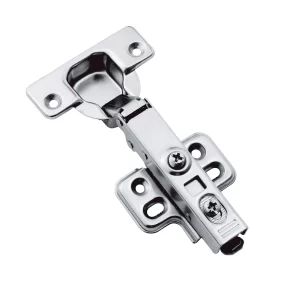
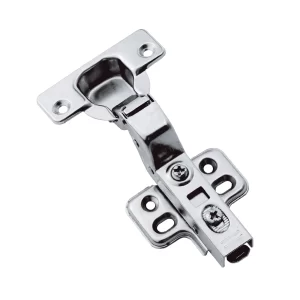
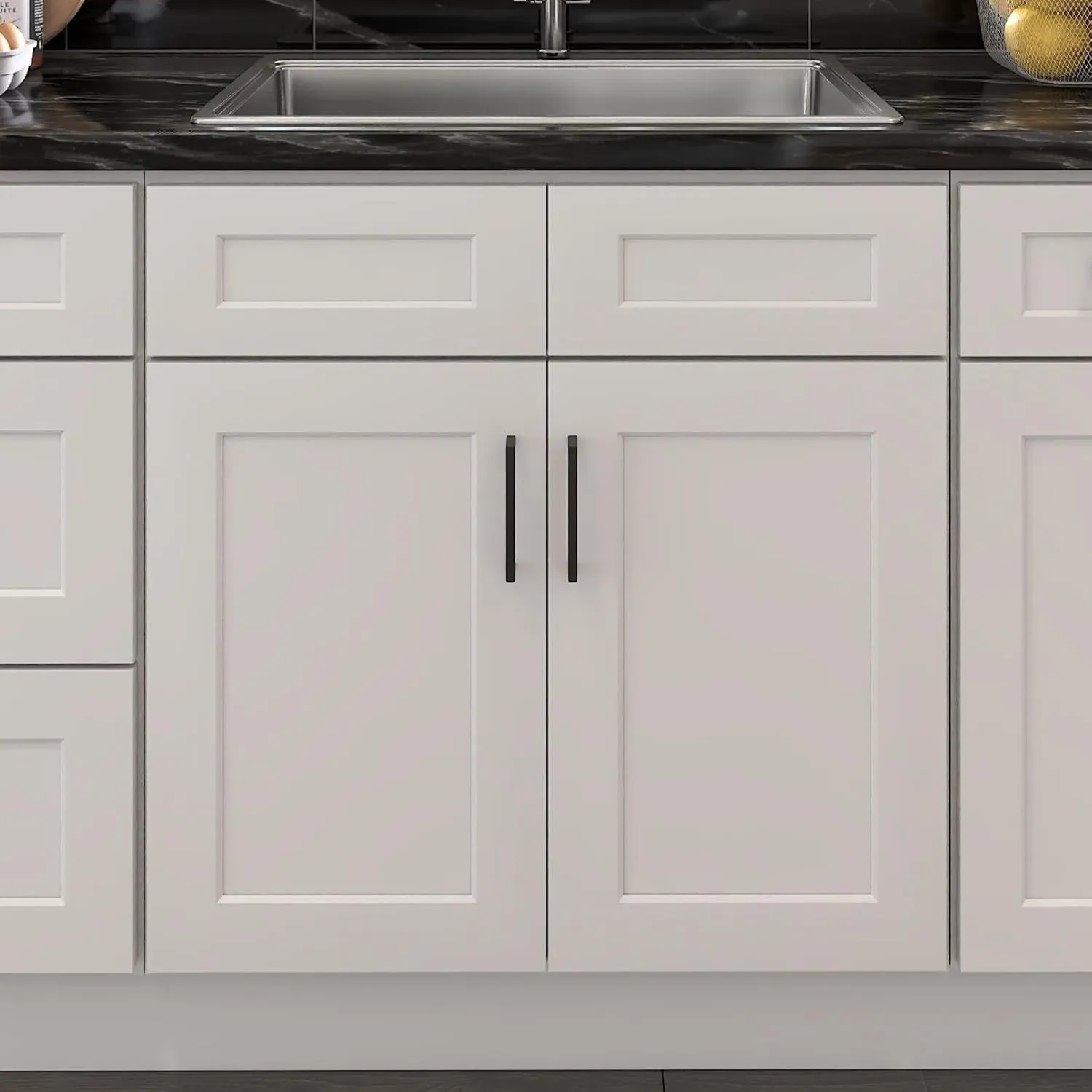
A half overlay hinge typically refers to concealed (European-style) hinges where each door covers part of the cabinet face—two doors can share a central stile.
A half overlay hinge is mechanically defined by its middle-crank (usually 9mm) arm geometry. Sourcing teams must verify this crank constant (K value) alongside mounting plate heights to ensure the 8-10mm overlay required for shared-stile applications.
If your design requires inset or full-overlay behavior, you must select hinges with the appropriate crank or plate option rather than assuming all half-overlay parts are interchangeable.
Classification by Installation Method
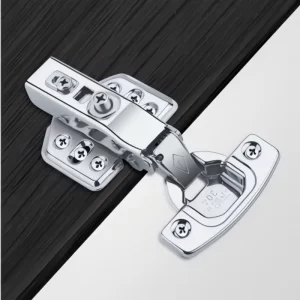
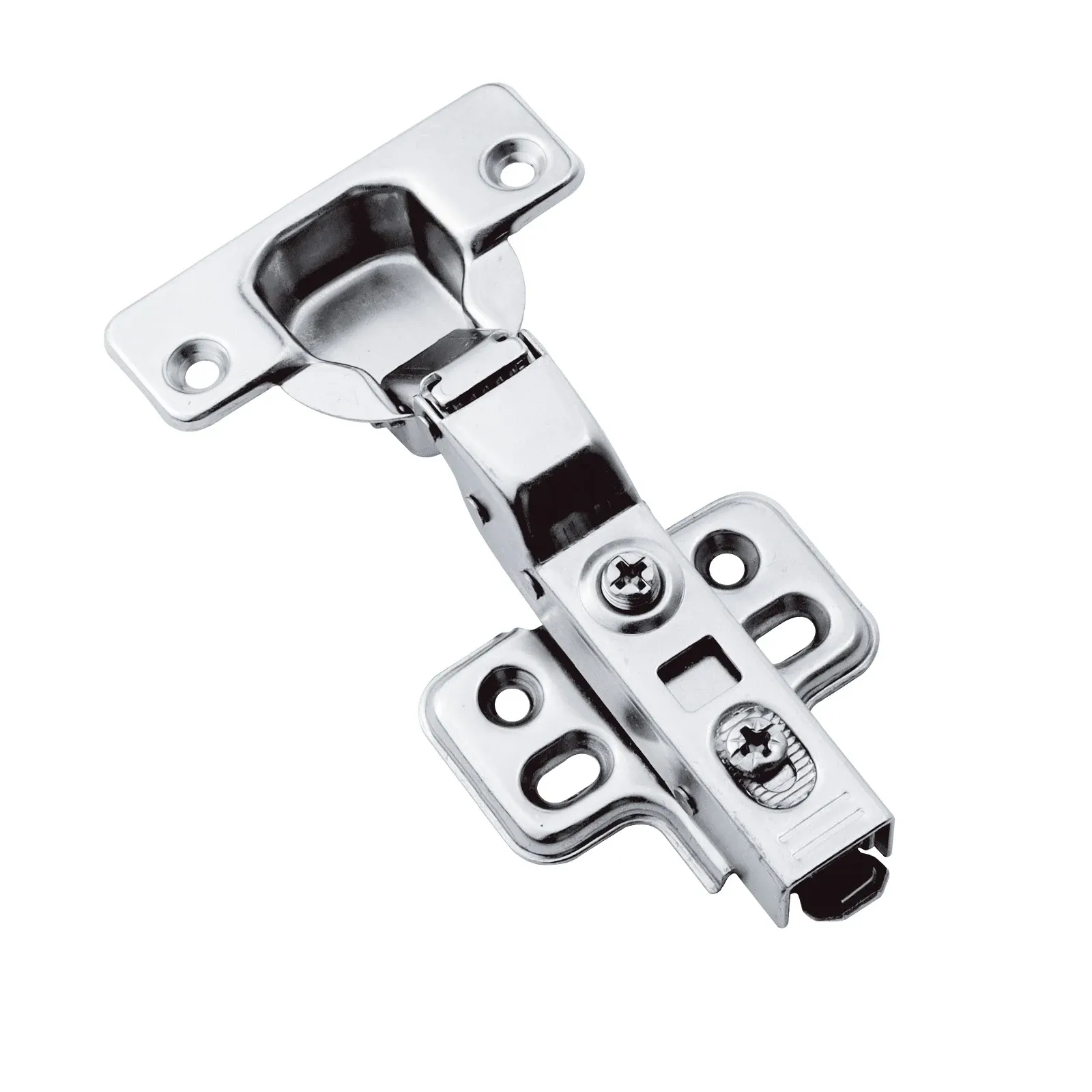
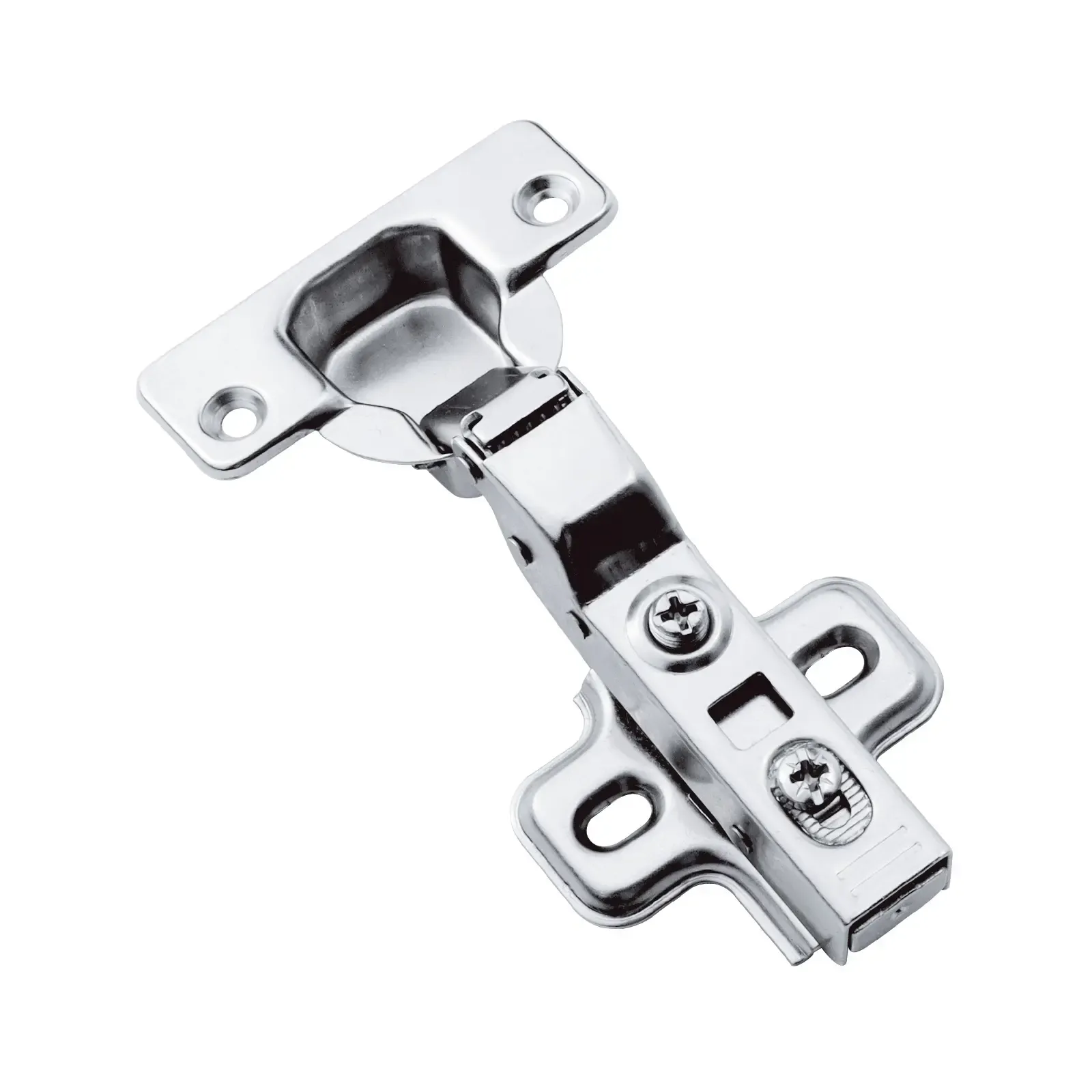
Clip-on (quick-assembly) half overlay hinges
- Value: Enables rapid assembly and easier field service.
- When to specify: High-volume production lines, modular furniture, export lines where fast turnaround matters.
- Risks: Clip mechanisms must be engineered for repeat removal; cheap clips loosen with cycles.
Screw-on (fixed) half overlay hinges
- Value: Screw-on hinges provide vibration resistance and prevent unauthorized disassembly at a lower unit cost, while Clip-on hinges prioritize assembly speed and modularity.
- When to specify: Heavy doors, installations with longer expected lifespan, markets where installers prefer screw-secured parts.
- Risks: Slower assembly; plate replacements require more labor.
Buyer tip: Decide early which assembly philosophy you adopt—clip-on for speed and aftermarket serviceability, screw-on for static load robustness.
Classification by Functional Features
Soft-close / damped hinges
- Why buyers ask for them: Perceived value and reduced door slam; fewer callbacks for broken doors.
- B2B considerations: Integrated dampers vs. add-on dampers affect cost and field repairability. Test damping behavior at temperature extremes (important for Russia(extreme cold)/Brazil(high humidity and high salt) markets).
Non-damped / self-closing hinges
- Why specify: Simpler internals, easier to repair in low-skill environments.
- B2B considerations: Lower warranty exposure in harsh environments where dampers can fail.
Classification by Opening Angle (Application-Driven)
110° standard hinges
- Why common: Balance of access, stress control, and compatibility with standard tooling and drilling templates.
- B2B implication: Default SKU for most projects—keep as core inventory.
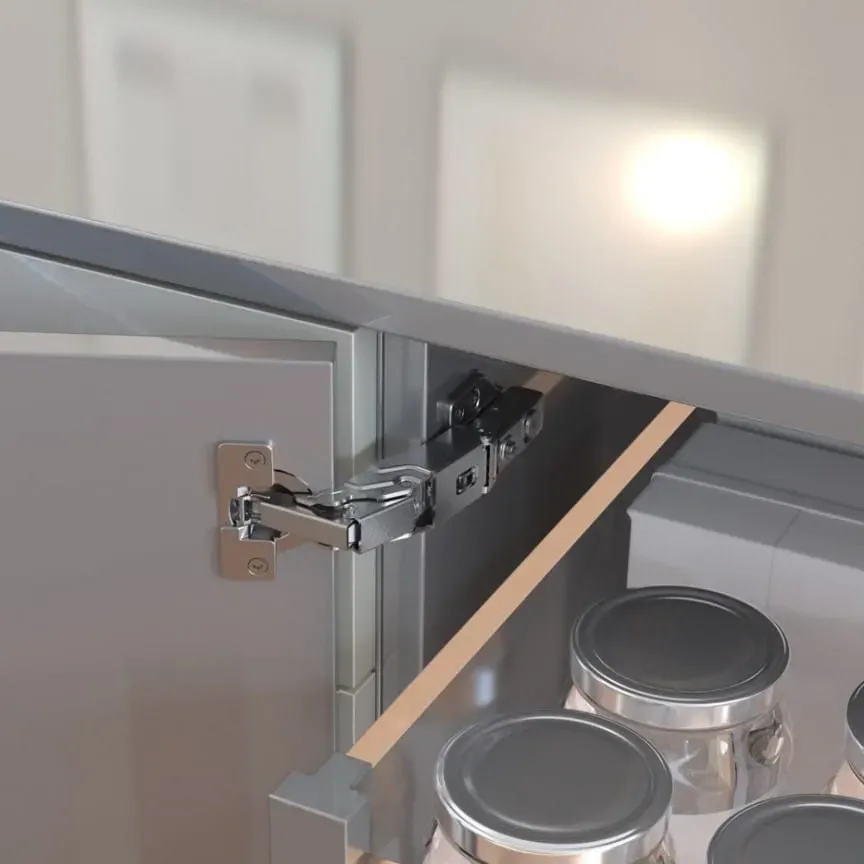
Wide-angle hinges (135°–165°)
- Why used: Corner cabinets, appliance-access doors, or where require zero-protrusion is required, which allows drawers to clear the door edge at a 90° opening.
- B2B implication: Require reinforced arms and different cams; treat as specialized SKUs with higher MOQ and longer lead times.
Classification by Cup Size and Compactness
Standard 35 mm cup hinges
- Why common: Global standard—easier to source, replace, and design around.
- B2B implication: Preferred for export-ready products and aftermarket parts.
Compact/mini hinges
- Why used: Thin doors, shallow profiles, or minimalist aesthetics.
- B2B implication: Limited adjustment and lower load capacity; avoid for heavy doors or high-cycle applications.
How Cabinet Hinge Manufacturers Rationalize Product Lines
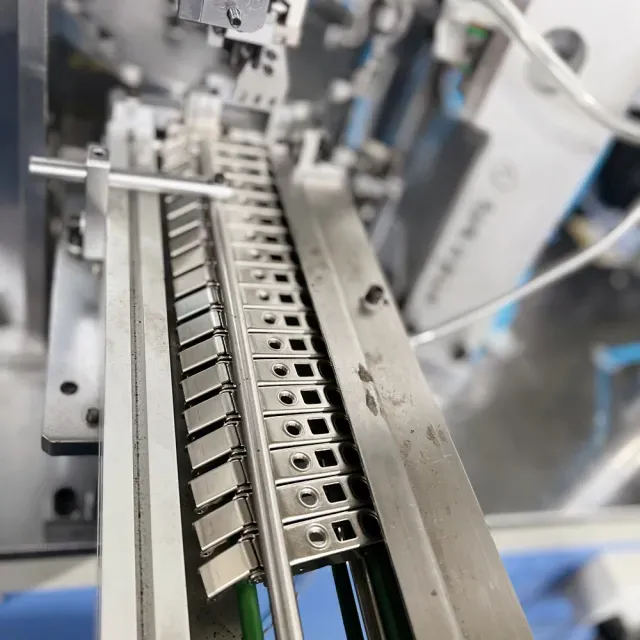
Good cabinet hinge manufacturers use modular architecture: common arms, a small set of damper modules, and a controlled range of mounting plates to create many SKUs without exploding complexity. For B2B buyers, this means you should evaluate whether the supplier’s family approach yields part interchangeability (fewer SKUs to stock) and clear BOM logic (easier contract manufacturing).
Key furniture hinge supplier questions:
- Are arms, cups, and plates interchangeable within a product family?
- How many unique tooling sets are needed to make the types you require?
- What are the MOQ and lead times for specialized angles or damped variants?
B2B Evaluation Checklist
When qualifying a supplier, prioritize these checks:
- Core quality data: cycle life (50k residential, 100k+ commercial benchmarks), salt-spray hours, pull-out force.
- Design transparency: technical drawings for cup, arm crank (K), cup position (C), plate height (P).
- Modularity: Can you order clip-on arms with different plate heights from the same family?
- Sample & pilot: always test assembly and on-site fitment with your door material and thickness.
- After-sales support: spare parts availability, replacement plates, and clear warranty terms.
- Production stability: SKU continuity (no sudden tooling swaps), batch test reports.
Conclusion
Manufacturers offer many half overlay hinge types because real-world cabinet programs demand trade-offs between speed, cost, function, and environment. For B2B buyers, the priority is less about the number of types and more about whether a supplier’s family architecture, test data, and supply stability match project needs. Specify installation method, opening angle, and cup/plate parameters early; insist on samples and test reports; and rationalize SKUs around the 110°/35 mm core to control cost and reduce risk. Doing so moves hinge selection from guesswork to engineering control—exactly what B2B procurement teams need.
About Mingrun
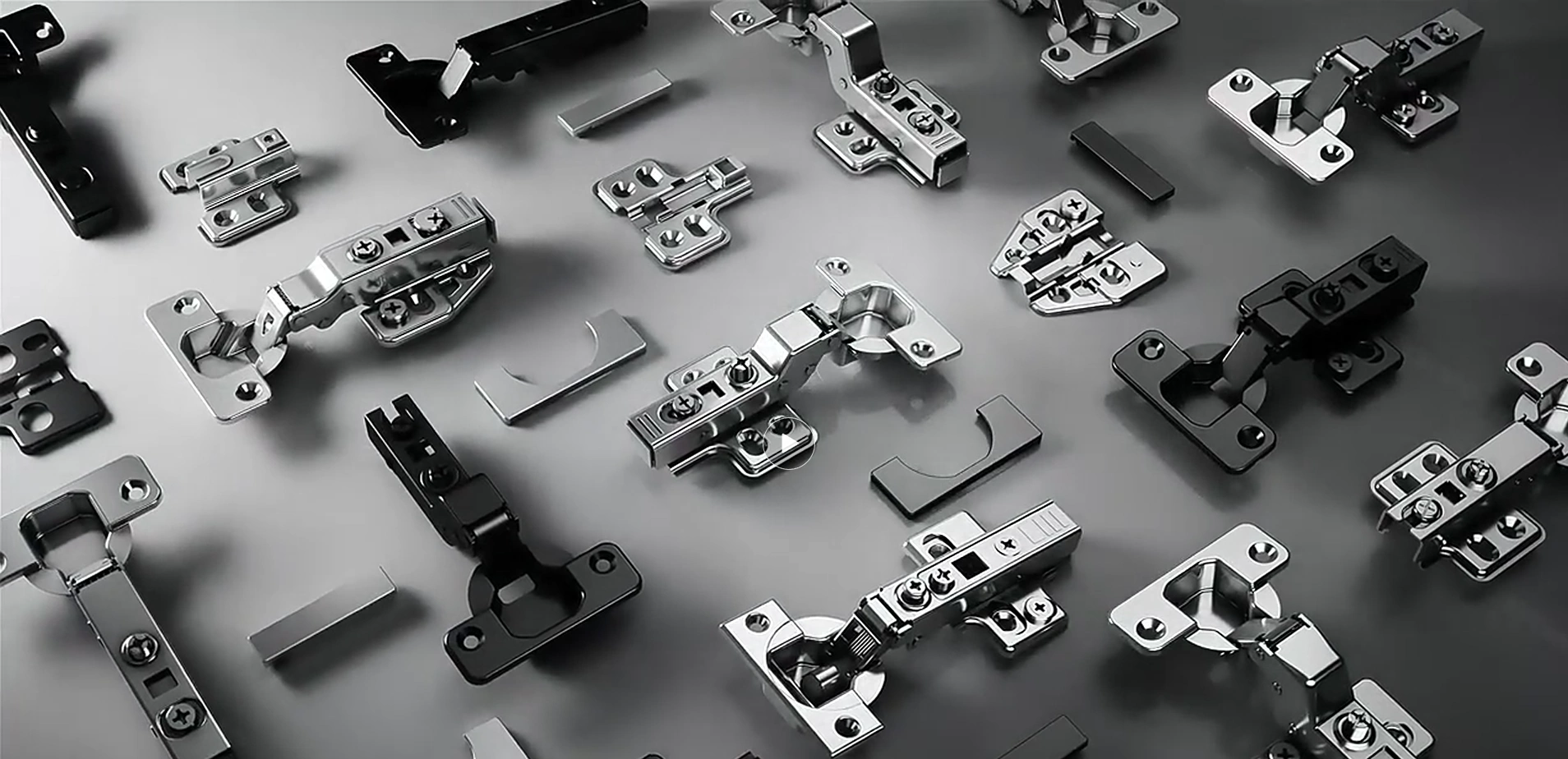
Mingrun has been recognized as a professional cabinet hinge manufacturer for years by our global clients. We specialize in supplying wholesale half overlay hinges for cabinets for project items, brands, retailers, and contributors. Moreover, if you are looking for cabinet factories to achieve your design, our custom cabinet hinge solution can help you with all the way from manufacturing to packaging.
FAQ — Common B2B Sourcing Mistakes
Q1: Is matching hinge appearance enough when sourcing?
A1: No. Visual match doesn’t guarantee critical dimensions (cup depth, crank offset, plate geometry) or functional compatibility—always verify technical drawings and samples.
Q2: How important is the choice between clip-on and screw-on?
A2: Very. Clip-on speeds assembly and serviceability; screw-on yields higher pull-out strength. Choosing the wrong type can multiply assembly time or increase field failures.
Q3: Can I substitute a wide-angle hinge for a standard hinge without other changes?
A3: Not safely. Wide-angle hinges often require different cup positions, reinforced arms, and stronger fixings—treat them as distinct SKUs, not drop-in replacements.
Q4: Why must I consider the environmental performance of half overlay hinges for furniture?
A4: Because dampers, lubricants, and finishes react differently to humidity, salt, and low temperatures. Ignoring the environment leads to premature damper/foundation/fade failures and higher warranty claims.