EN
EN  FR
FR  DE
DE  RU
RU  ES
ES  PT
PT  AR
AR  JA
JA 
Over the past decade, one component has quietly shifted from optional convenience to default specification in modern cabinet manufacturing: the clip-on hinge.
In this article, Mingrun, a professional hinge manufacturer, explains why factories, OEMs, and distributors increasingly list clip-on hardware as the baseline—focusing on installation efficiency, serviceability, system compatibility, quality control, and total cost of ownership.
What Defines a Clip-on Hinge
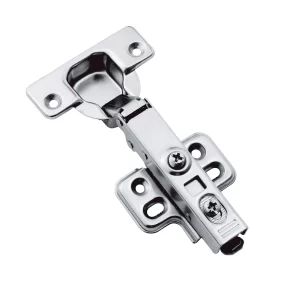
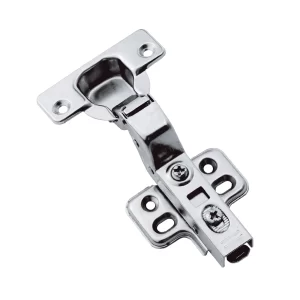
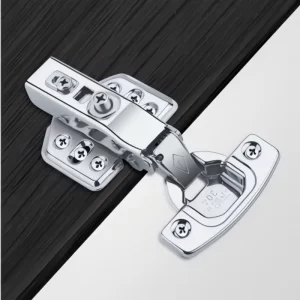
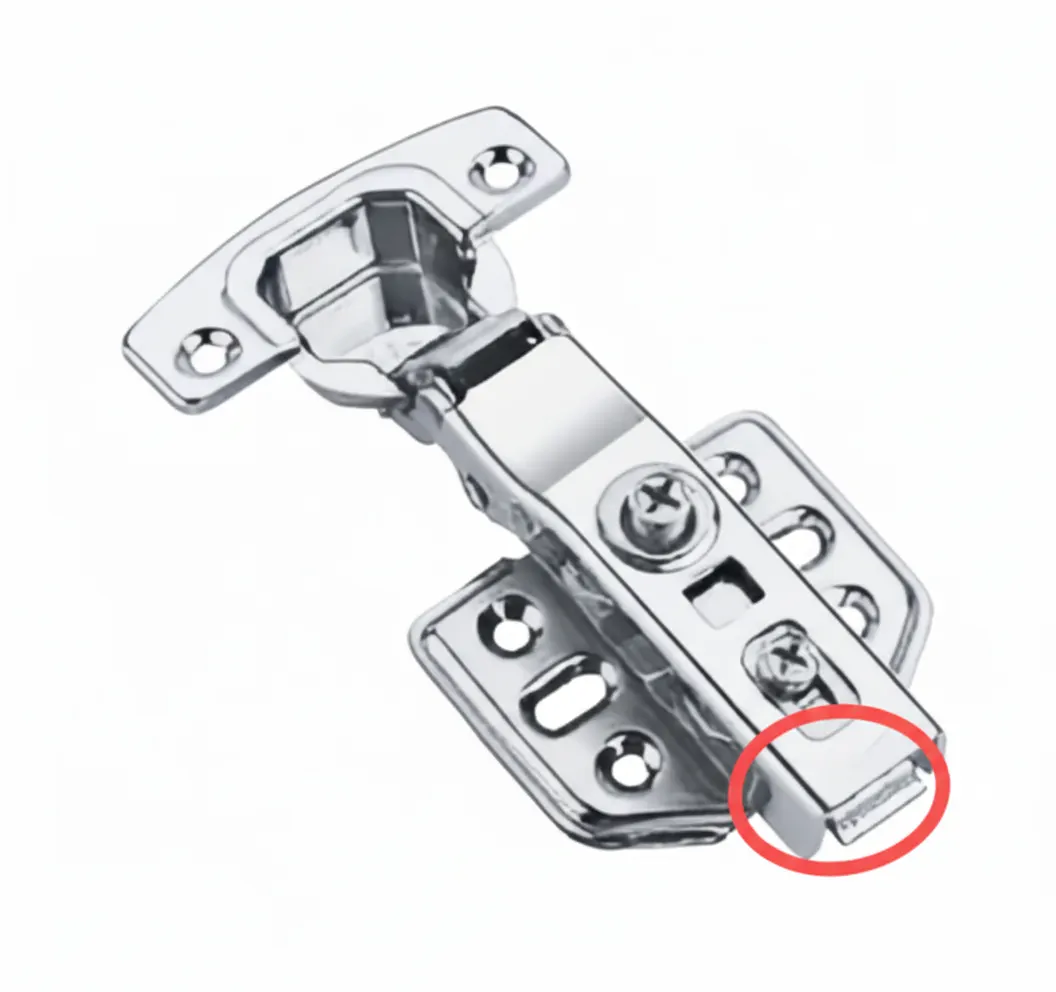
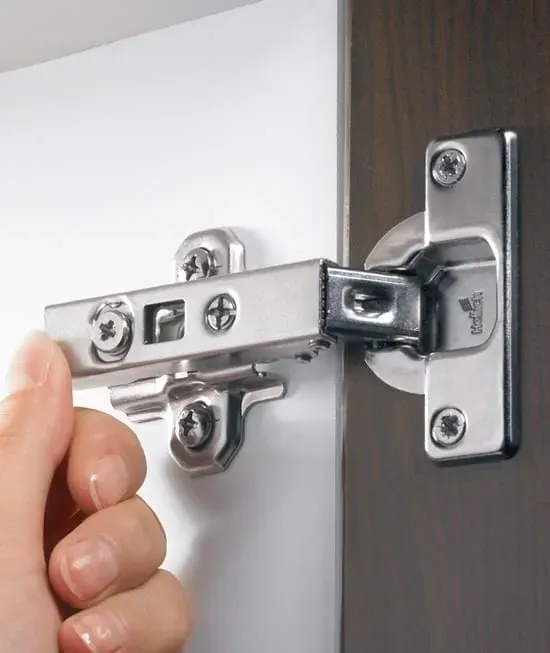
A clip-on hinge, one of the quick-install hinges, is a concealed (European-style) hinge where the hinge arm mechanically locks into a mounting plate via a tool-less clip or release mechanism. The assembly typically consists of a 35 mm cup mounted in the door, an articulated arm, and a plate that remains fixed to the carcass.
The defining behaviors are simple: push the door onto the plate, and it clicks in; press the release, and the door comes off without unscrewing anything. That tool-less disconnect differentiates clip-on designs from screw-on and slide-on alternatives.
Installation Efficiency: The Primary Business Driver
For B2B operations, labor is the largest controllable line item after materials. The clip-on hinge addresses that directly:
- Faster assembly: Pre-fitted mounting plates allow doors to be hung in seconds, reducing per-door fitment time vs. screw-on solutions. On high-volume lines or modular systems, the cumulative time savings are substantial.
- Lower skill requirement: Clip-on systems tolerate less-skilled labor for final hanging—important in seasonal or scaling production.
- Simplified logistics: With plates pre-installed in the cabinet carcass, doors can be finished, packed, and installed late in the supply chain without extra machining.
These efficiencies don’t just cut labor; they shorten lead times and reduce line variability—critical for just-in-time manufacturing and export-packed furniture.
Maintenance, Adjustment, and After-sales Benefits
A clip-on hinge brings practical advantages well after handover:
- Quick serviceability: Field technicians can remove and replace doors without unscrewing fastenings—useful for transport protection or appliance installation.
- Easier repair & warranty handling: A single, swappable hinge arm or plate can address many fitment issues on-site, lowering return trips and warranty logistics.
- Reduced accidental damage: Fast, tool-less removal reduces the risk of stripped screws or ripped door edges during maintenance.
For large projects—multi-unit housing, hospitality fit-outs, or retrofit programs—this translates into lower lifecycle service costs.
Compatibility with Modern Cabinet-system Design
Contemporary cabinet manufacturing favors modularity and late-stage customization. The clip-on hinge fits that model:
- Pre-installed plates allow late-stage door hanging, enabling variant doors (different color/finish) to be assembled near dispatch without changing carcass tooling.
- Standardization around 35 mm cup geometry means many clip-on arm families interchange within a product line—reducing SKUs and simplifying spares.
- Flat-pack and knock-down furniture benefit from clip-on systems that remove the need for high-skill final assembly at the customer’s site.
These attributes make clip-on hinges particularly attractive to OEMs serving multi-channel distribution.
Integration with Advanced Functions
Clip-on architectures readily incorporate advanced features:
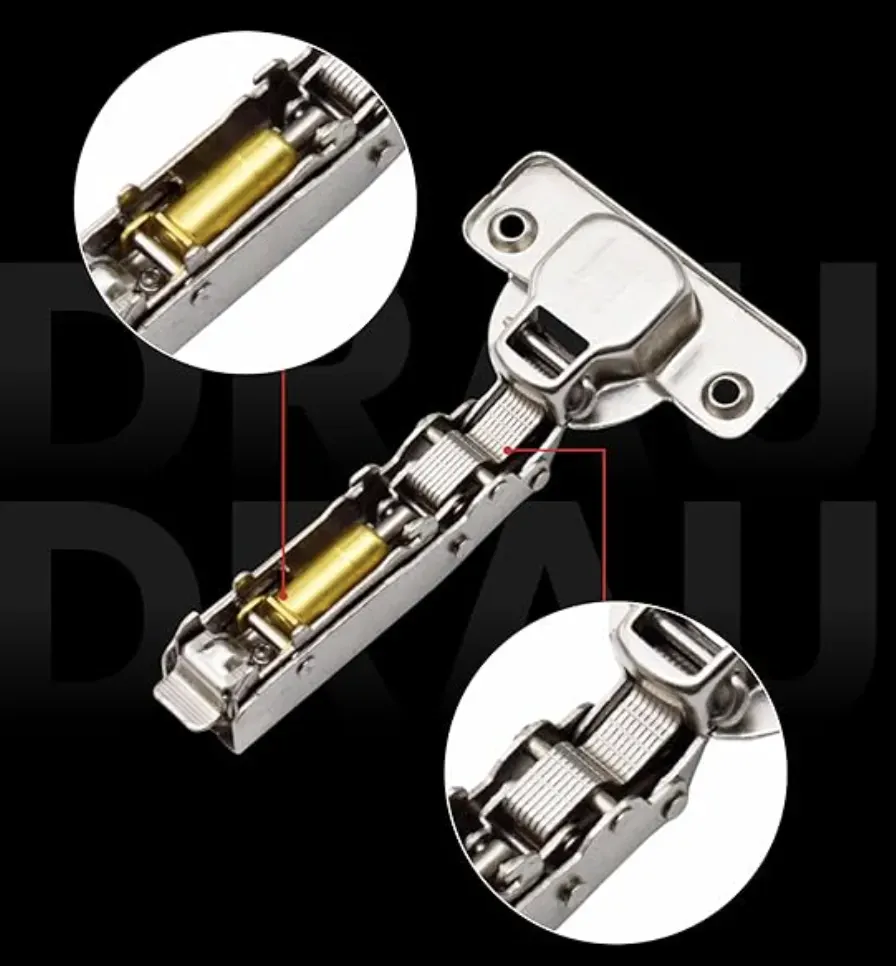
- Soft-close dampers are commonly integrated into the arm or plate, offering consistent damping performance and easy replacement.
- Push-to-open mechanisms and limited-angle adapters coexist with clip-on plates in the same family, enabling a coherent product platform.
- Wide-angle and compact variants are manufacturable within the same modular family, so buyers can mix standard and special-use pivots while maintaining interchangeability.
The modularity of clip-on platforms means new functions can be introduced without redesigning the complete hinge system.
Quality Control and Reduced Error Rates
From a factory QA perspective, clip-on systems lower variability:
- Fixed plates establish repeatable reference geometry—doors hang to predictable alignment across batches.
- Fewer torque-critical field fastenings reduce the risk of incorrect installer torque and subsequent failures.
- Design-for-manufacture is simpler: the plate is installed once during carcass assembly, and final hanging is a consistent step.
For distributors and specifiers, that repeatability translates directly into fewer complaints and predictable returns.
Total Cost of Ownership Vs. Unit Price
A reality in B2B procurement: the cheapest hinge per unit is rarely the cheapest over a product’s lifetime. Clip-on hinges may carry a small premium versus bare screw-on parts, but:
- Labor reductions and faster throughput offset per-unit premiums.
- Lower warranty and field-service costs compound savings across a product run.
- Reduced rework and fewer installation errors lower indirect costs.
When procurement teams model TCO rather than unit price, clip-on systems usually show a clear advantage.
Where Clip-on Hinges Are Not Ideal
Clip-on hinges are not a panacea. Scenarios to evaluate carefully:
- Ultra-low-cost disposable furniture where even small unit-cost premiums change margins.
- Legacy production lines are locked into screw-on tooling, where changeover cost is prohibitive.
- Extremely heavy or specialized doors that require custom reinforcement beyond typical clip-on designs.
In those cases, a cost/benefit assessment—factoring retooling expense, labor differentials, and downstream service implications—will determine the correct path.
Conclusion
The rise of the clip-on hinge reflects an industry-wide optimization: reduce labor, improve serviceability, and standardize geometry for predictable assembly and after-sales performance. For OEMs, cabinet manufacturers, and project buyers aiming to scale efficiently while minimizing lifecycle risk, specifying clip-on as the baseline hinge is no longer a premium option—it’s increasingly the operationally smart choice. When you evaluate hinge suppliers, prioritize modular clip-on families, verified cycle and corrosion testing, and clear interchangeability data—those are the factors that transform a hinge from a commodity to a strategic component in modern cabinet production.
About Mingrun

Mingrun is a professional hinge manufacturer serving cabinet factories, furniture OEMs, and distributors with wholesale cabinet hinge supply worldwide. Our wholesale clip-on hinges gain great reputation as well among our global clients. For B2B clients, Mingrun can offer a one-stop custom hinges solution to help with your business.