DE
DE  EN
EN  FR
FR  RU
RU  ES
ES  PT
PT  AR
AR  JA
JA 
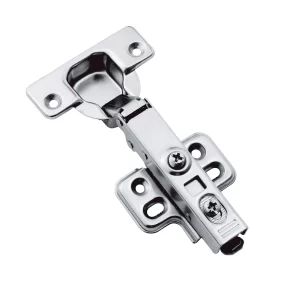
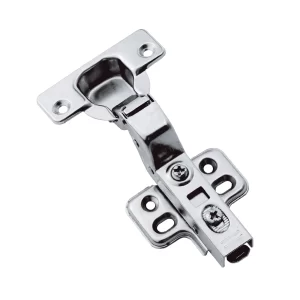
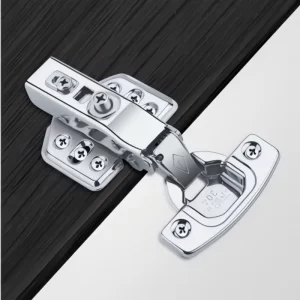
Als professioneller Scharnierhersteller, Mingrun wants to notice you that the geometry of the hinge arm is more important than you think. It defines door positioning, load paths, ease of installation, and long-term durability.
Engineers, specifiers, and B2B buyers who understand how straight, half-cranked, and full-cranked hinge arm shapes work will avoid costly mis-specification, reduce field callbacks, and optimize both part count and inventory.
This article explains the core mechanics of each arm shape, shows how crank depth determines overlay amount, and gives practical guidance for selection and testing.
What Hinge Arm Geometry Determines
“Overlay” is commonly described as half overlay or full overlay, but those labels are outcomes, not causes. The real determinant is the horizontal offset produced by the hinge arm geometry, together with cup position and mounting-plate height. In short:
Overlay position = cup location + crank offset + plate height
That means two hinges marketed as the same “type” can produce different door positions if their arm crank depths (offsets) differ. Treat overlay as an engineered sum of dimensions—not a marketing tag.
What “Crank Depth” Means
Crank depth (sometimes called offset) is the lateral displacement introduced by bends in the hinge arm. Picture the arm path from cup to pivot: a straight arm keeps the pivot near the door plane; a cranked arm moves that pivot away by several millimeters. Small changes in crank depth (often 2–5 mm) can visibly change the reveal or cause a collision. Because of the lever effect, crank depth has a nonlinear impact on door position under load—so precision matters.
Straight-arm Designs: Minimal Offset, Maximum Leverage
Definition & geometry
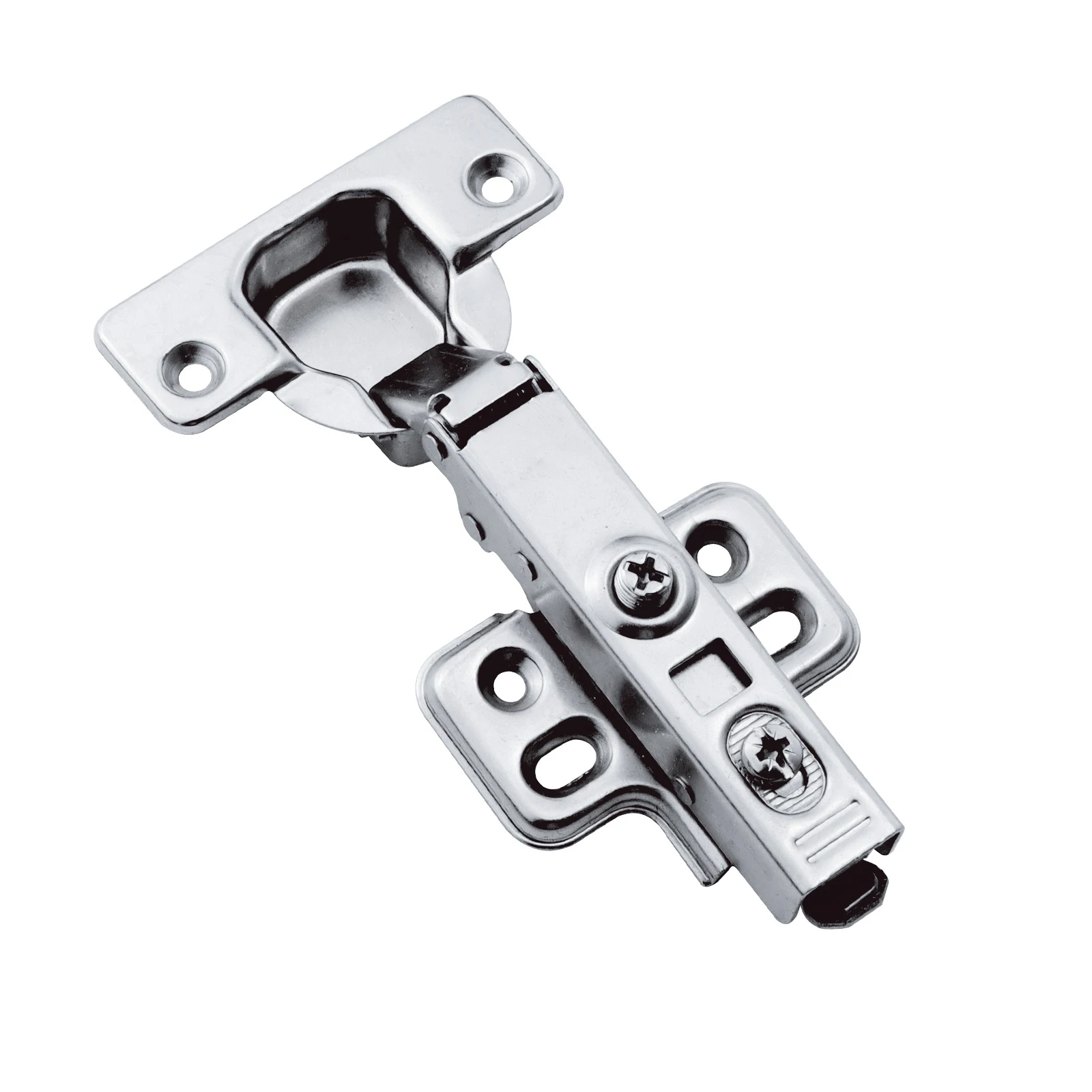
A straight hinge arm is essentially a linear link from cup to pivot with minimal lateral bends. The pivot axis remains close to the door surface.
Applications
- Full-overlay frameless cabinets where the door needs to cover most of the carcass face.
- Situations where a minimal arm profile is required for aesthetic reasons.
Mechanical trade-offs
- High lever arm: straight arms transmit larger lateral forces to pins and fixings, increasing torque on pivots.
- Simpler forming and inexpensive tooling.
- For heavy doors, straight arms may require stronger pins or reinforced cups to avoid deflection.
Half-cranked Arms: Engineered Compromise for Shared Stiles
Definition & geometry
Half-cranked hinge arm designs introduce a moderate offset—enough to allow two adjacent doors to share a partition (common in half-overlay systems) while keeping the arm compact.
Applications
- Face-frame cabinets with paired doors.
- Multi-door kitchen banks where precise reveals are required.
Benefits
- Balanced load distribution: the offset reduces extreme leverage on pins compared with perfectly straight arms.
- Better clearance management between adjacent doors.
- Easier to standardize a platform across both framed and some frameless systems.
Überlegungen
- Requires accurate cup drilling and plate selection to achieve consistent reveals across batches.
- Reinforcement ribs or slight increases in arm thickness are common to control fatigue at the crank bend.
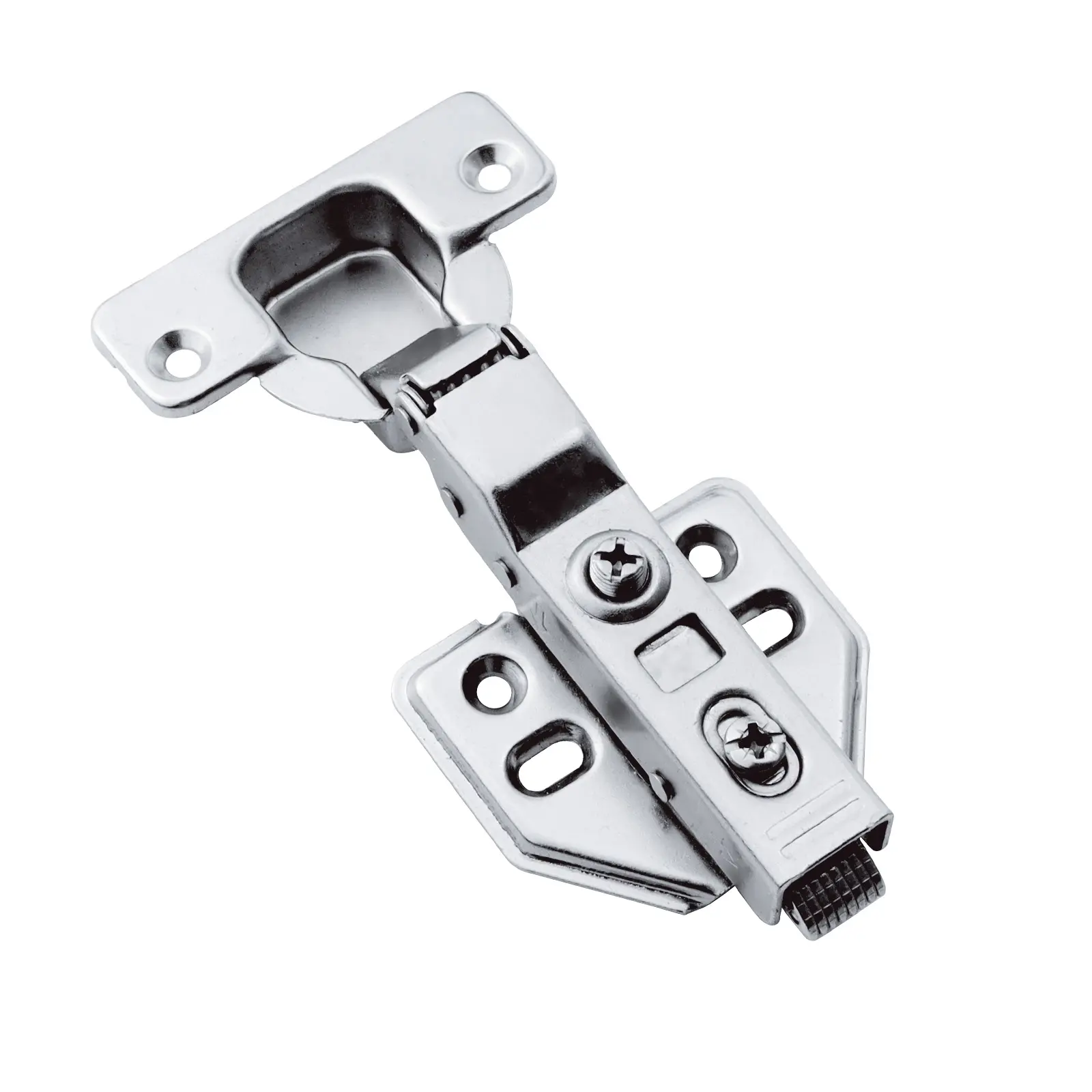
Full-cranked arms: maximum offset for inset and special cases
Definition & geometry
Full-cranked hinge arm shapes include deep bends that create a significant lateral offset, moving the pivot well away from the door plane. This geometry can allow inset or near-inset positioning without changing carcass construction.
Applications
- Inset doors that need to sit flush with a face frame.
- Situations requiring negative offsets or specialized clearances.
Mechanical trade-offs
- Greater bending moments at crank points—these areas must be engineered with ribs, gussets, or thicker cross sections.
- Increased torque on fastenings and pivot pins means cups and screws must be rated for the additional loads.
- Typically more costly to tool and produce due to multi-stage forming.
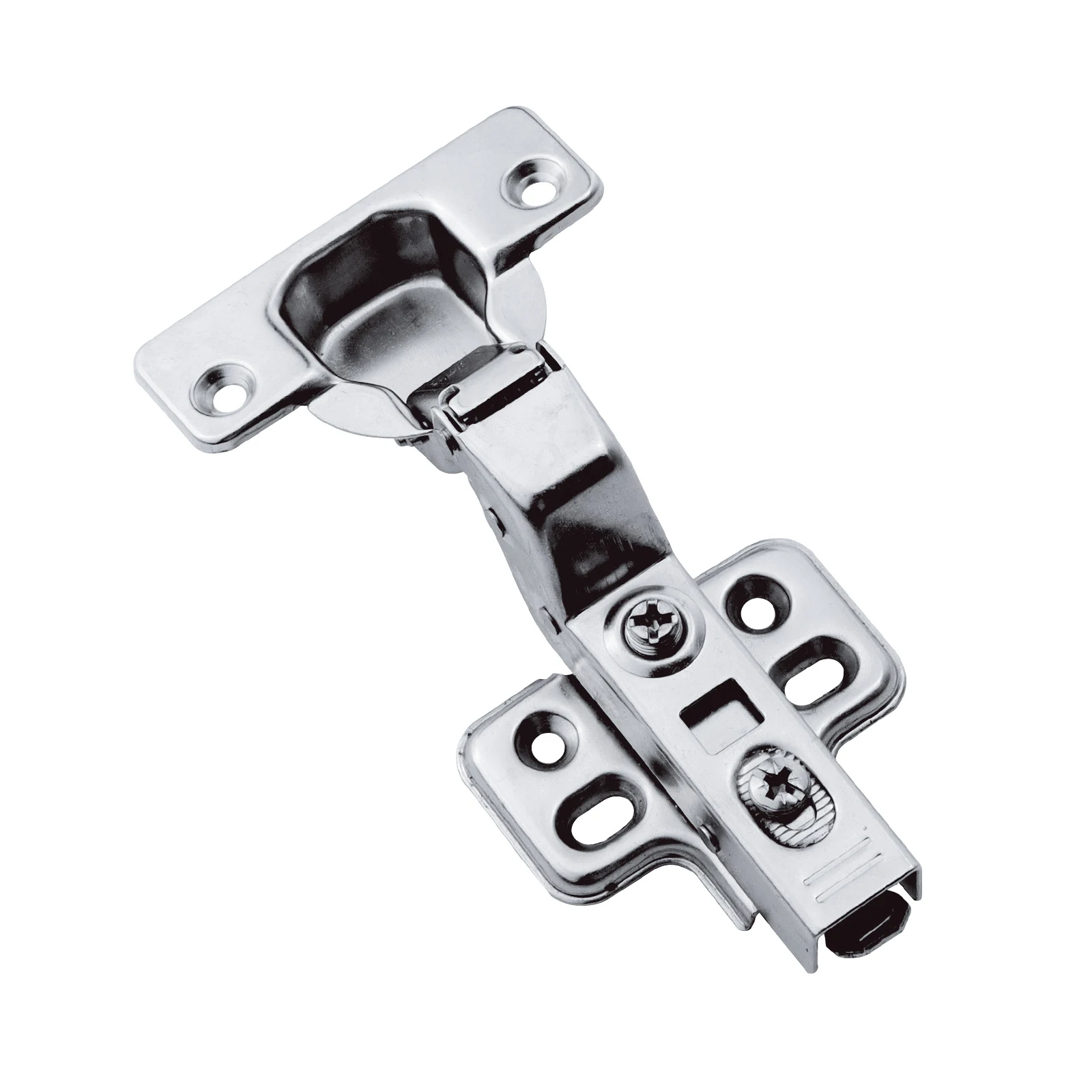
Interaction with Mounting Plates and Cup Position
The hinge arm never acts alone. Mounting-plate height (P) is the common field adjustment used to fine-tune the overlay after arm selection. However, plate height has limited travel; it cannot fully compensate for a grossly mismatched crank depth. For precise outcomes:
- Request dimensional data for cup center (C), crank offset (K), and plate heights (P) from suppliers.
- Compute the expected overlay (O ≈ C + K + P) and verify with a mock-up.
- Favor hinges with 3D adjustment where site tolerances are unpredictable.
Load, Fatigue, and Durability Implications
Crank depth changes stress distribution across the hinge arm:
- Bends create stress concentrators—proper radii and forming controls reduce fatigue risk.
- Deep cranks lengthen the lever arm, increasing the moment at pins and screws; designs should be validated with cycle life and pull-out tests.
- Corrosion and surface wear are more damaging at bends and joints; ensure finish quality and protective treatments are specified appropriately.
Typical B2B thresholds to request from suppliers:
- Cycle life: 50,000 cycles (residential) to 100,000+ (commercial).
- Pull-out force and torque ratings for screws and cups.
- Salt spray hours appropriate to application (e.g., 48–240 h for indoor, 240+ h for coastal).
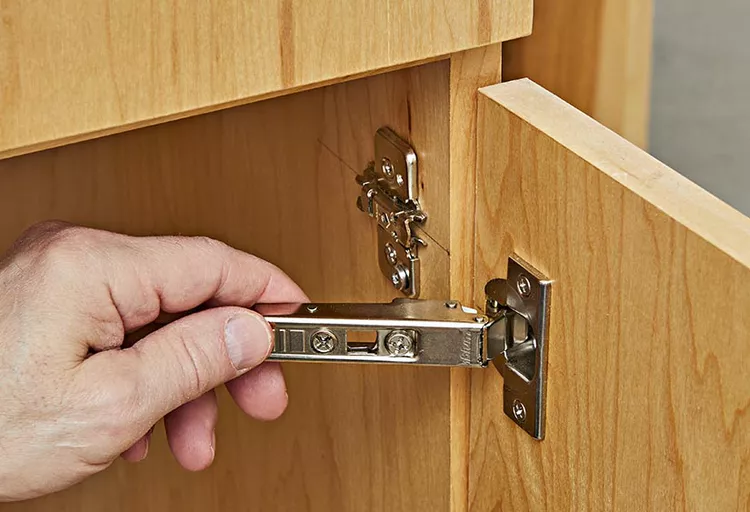
Manufacturing Constraints and Why Standardization Helps
Tooling and process set limits on achievable crank shapes. Suppliers often standardize on a small family of arm geometries (straight, half-cranked, full-cranked) to balance SKU breadth with production efficiency. Automated stamping and CNC bending improve consistency in crank depth; request SPC data or tolerance bands for critical crank dimensions.
Practical Selection Checklist for Specifiers and Buyers
- Define target overlay in millimeters rather than relying on “half/full” labels.
- Request C, K, and P dimensions and simulate O = C + K + P.
- Ask for cycle, pull-out, and salt spray test data relevant to your market.
- Choose reinforcement (ribs, thicker cross-section) for deep-crank designs or heavy doors.
- Insist on 3D adjustable plates to manage field variability.
- Validate with a physical sample and repeated open/close cycles under load.
Schlussfolgerung
The hinge arm shape is the fundamental engineering lever for door positioning. Straight, half-cranked, and full-cranked arms are not mere product variants—they embody trade-offs between geometry, strength, cost, and manufacturability. Treat crank depth as a controlled specification: measure it, simulate overlay results, and validate through testing. Doing so turns hinge selection from guesswork into predictable engineering, reducing rework and improving long-term performance.
Über Mingrun

Known as a professioneller Scharnierhersteller, Mingrun has a self-possessed automated hinge manufacturing factory, which is capable of serving B2B buyers, brands, and distributors, etc. With standardized yet tightly controlled arm geometries, Mingrun delivers a stable, repeatable supply across straight, half-cranked, and full-cranked hinge platforms, ensuring consistent overlays and long-term durability at scale.
Beyond the standard catalog, Mingrun offers Individuelle Scharnierlösungen für Schränke for helping B2B buyers reduce mis-specification risk, streamline inventories, and achieve predictable installation and service performance in mass production environments by combining controlled manufacturing processes with application-focused engineering support.