EN
EN  FR
FR  DE
DE  RU
RU  ES
ES  PT
PT  AR
AR  JA
JA 
The hinge angle of a cabinet hinge might seem like a small specification on a datasheet, but it determines how a door swings, how much access you get to the cabinet interior, and how the hinge performs over the years of use.
For half overlay hinges, the industry has largely settled on 110° as the standard opening angle. In this article, we, Mingrun, a leading furniture hinge manufacturer, will look at mechanical constraints, cabinet-clearance realities, user ergonomics, structural optimization of hinge arms, and practical manufacturing reasons that together make 110° the sweet spot.
Why Hinge Angle Matters
At its core, the hinge angle defines the rotational range between a door’s closed and fully open positions. Too small, and the door limits access and usability. Too large, and you introduce mechanical stress, potential collisions with adjacent cabinets or walls, and a marginal ergonomic benefit. For half overlay doors—where each door covers part of the cabinet face—choosing the correct hinge angle is about balancing accessibility with reliability, safety, and manufacturability.
Mechanical Constraints that Limit Opening Angles
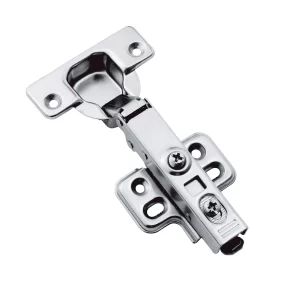
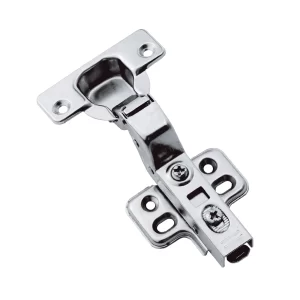
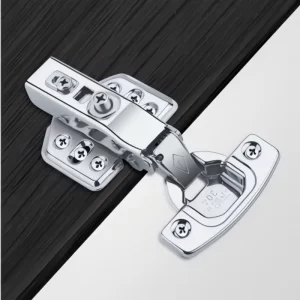
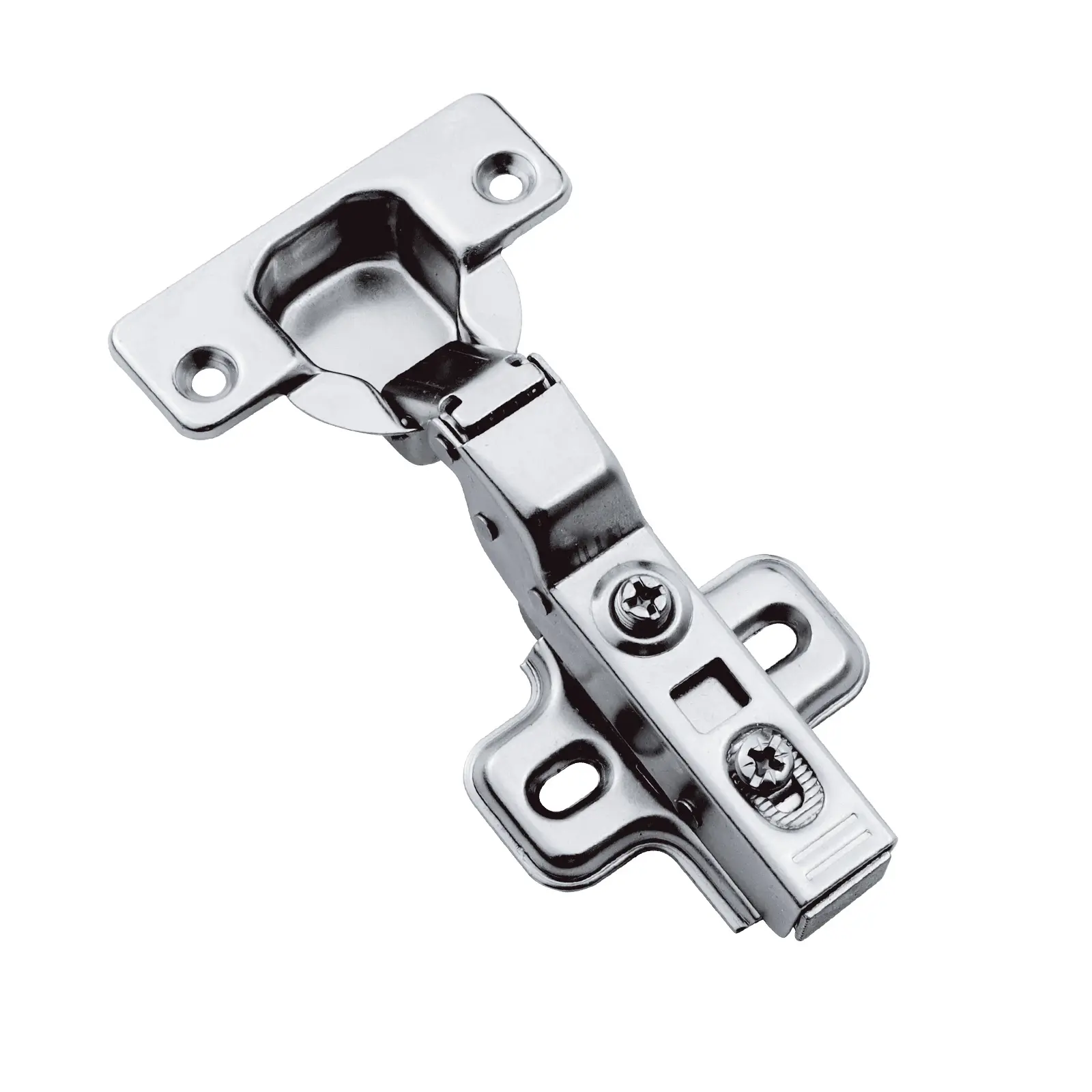
A hinge is a compact mechanism made of a cup, arm, pivot(s), springs or dampers, and a mounting plate. The internal pivot geometry and linkage paths physically constrain how far the arm can rotate without binding or overstressing components.
- Pivot placement and linkage travel: The pivot points and internal cams are designed to translate rotation into a controlled motion path. Extending that path beyond certain limits requires larger, more complex linkages—adding cost and bulk.
- Stress and fatigue: As rotation increases, the lever arms and joints experience higher bending moments and torsional loads, especially at extremes of travel. Over many cycles, those increased loads accelerate fatigue and wear. Keeping the hinge angle near 110° helps keep peak stresses within safe ranges for common materials and manufacturing tolerances.
- Compactness: Cabinet hinges are expected to be small and unobtrusive. Achieving wide angles in a compact housing usually means trade-offs—thicker arms, larger cup diameters, or more complex internals—all of which conflict with typical design goals for half overlay hardware.

Cabinet Frame and Door Clearance Factors
The geometry of cabinets imposes hard boundaries on door motion.
- Side panels and adjacent doors: Half overlay doors overlap the cabinet stile or meet adjacent doors. If the hinge permits too wide an opening, the door can hit neighboring doors, hinges, or separators. A 110° hinge angle generally avoids these collisions while still allowing comfortable access.
- Stile and face-frame interference: For framed cabinets, face-frame members (stiles) and decorative moldings create potential collision zones. 110° provides a generous opening that keeps the door clear of most common frame profiles.
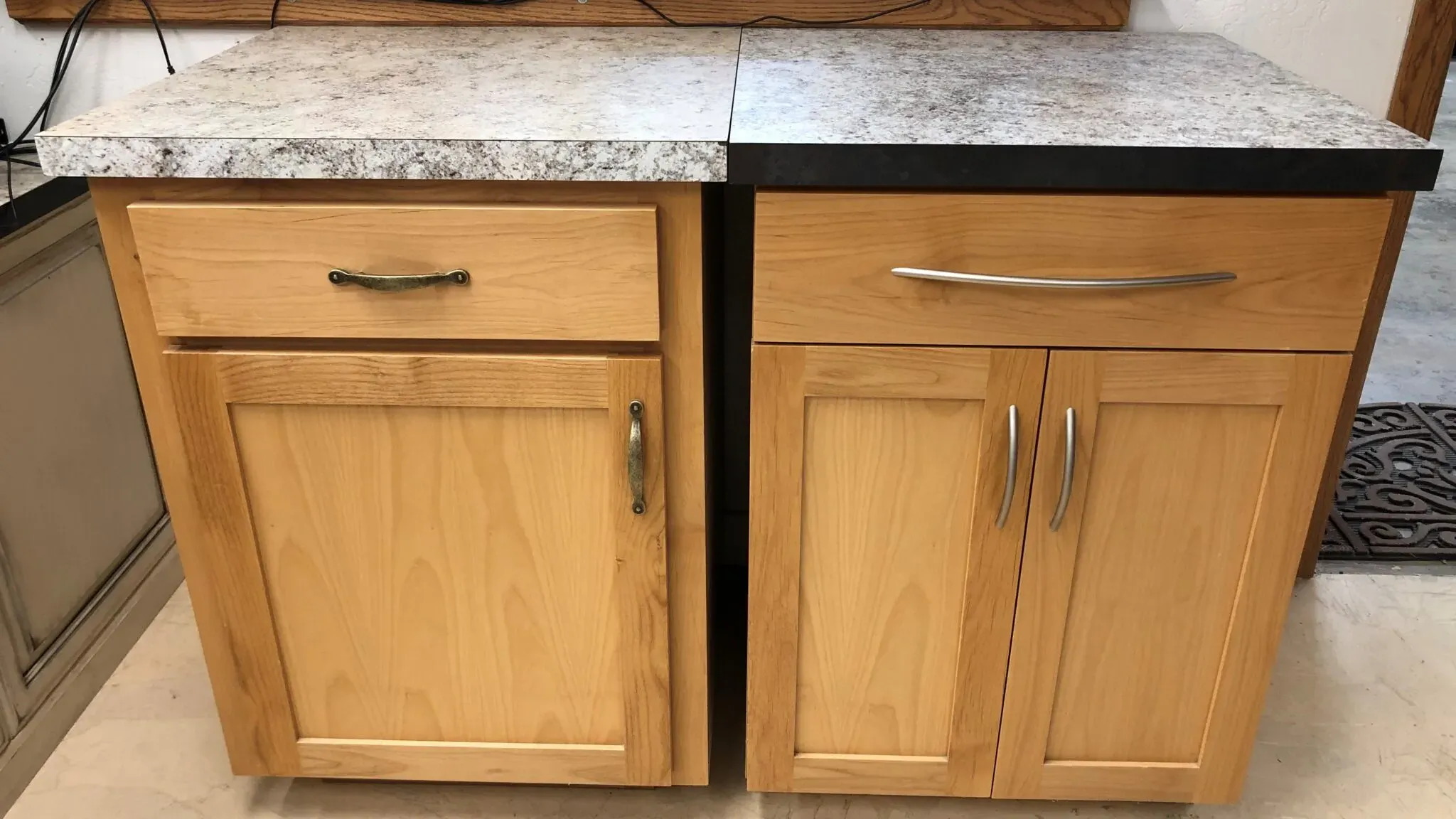
- Counter and wall clearances: In kitchens, open cabinet doors must not interfere with countertops, backsplashes, or adjacent appliances. For convenience, therefore, the standard hinge angle accounts for typical countertop depths and appliance placements used in kitchens worldwide.
Ergonomic and User-Experience Considerations
Human movement patterns and usability studies have influenced how much opening range delivers real benefit.
- Access vs. effort: The additional access gained past about 110° yields diminishing returns. Most tasks—loading dishes, reaching for pantry items, or arranging shelves—are efficiently done with the door open to around 90–110°. Wider openings make little difference for daily use.
- Visibility and reach: At roughly 110°, the door is out of the way of the user’s primary line of sight and arm reach, enabling comfortable, natural interaction with the cabinet interior.
- Safety: Wider swing angles can increase the chance of fingers being pinched between the door and adjacent surfaces or create awkward overreach situations. Limiting the hinge angle to around 110° reduces common pinch points and keeps motion predictable and safe.
Structural Optimization of the Hinge Arm
Hinge arms are engineered to transfer loads smoothly and resist bending and fatigue. It is not only the result of installation and user experience, but also the optimal structural solution under the balance of industrial engineering and materials science.
- Crank geometry: Half overlay hinges often use a cranked arm to position the door at the correct overlay. The crank depth, arm thickness, and curvature are optimized for a specific motion arc—one that naturally corresponds to a 110° opening.
- Stress distribution: Designing the arm around 110° allows engineers to place reinforcements (ribs, bends, or thicker sections) where stresses concentrate during use. Exceeding that designed arc would shift stress patterns and require redesign.
- Material choices: Given the standard hinge angle, manufacturers can select common grades of steel, zinc alloy, or stainless steel and be confident about fatigue life without resorting to exotic materials or oversized geometry.
Manufacturing and Industry Standardization
Standards have an important role in all aspects of tooling, interchangeability, and cost management.
- Optimizing Tooling.
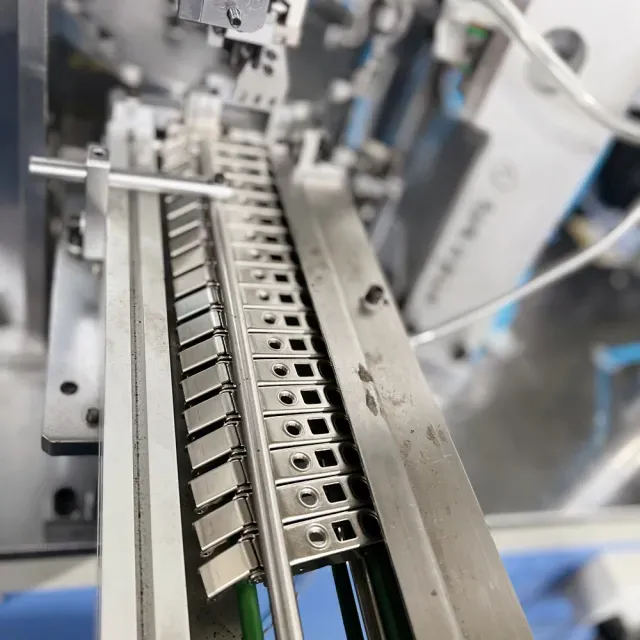
Production tool sets (e.g., dies, stamping tools, and jigs) used to manufacture furniture hinges are costly to modify; therefore, utilizing a defined angle, such as 110 degrees, helps to create a uniform quality of product while allowing for bulk furniture hinge purchases.
- Hinge Compatibility.
The vast majority of mounting plates, cup sizes (35 mm), and drill templates are built to accommodate a hinge angle of 110 degrees. This allows for greater accuracy during installation and simplifies the management of inventory for both cabinet makers and installers.
- Interchangeability of Parts.
Installers and OEMs both benefit from having hinges that operate similarly across all manufacturers. In addition, by using a common hinge angle, the variability seen in the field is reduced; therefore, replacing or upgrading hardware will be much easier.
When Wider or Narrower Angles are Used
There are legitimate cases for alternative angles: compact utility cabinets might use 95° hinges to avoid obstructions; corner cabinets and specialized applications may require 135° or 165° wide-angle hinges. However, these designs usually require thicker arms, longer cups, or specialized mounting plates—factors that increase cost and complicate assembly. Thus, they are niche solutions rather than mass-market standards.
Conclusion
The prevalence of the 110° hinge angle for half overlay hinges is not arbitrary. It reflects a balanced convergence of mechanical feasibility, cabinet-frame geometry, ergonomic function, structural reliability, and manufacturing practicality. For most kitchen, bathroom, and furniture applications, 110° provides the best trade-off between access and durability while keeping parts compact, affordable, and easy to install. When special conditions demand otherwise, engineers and designers can choose alternate angles—but for the broad market, 110° remains the sensible standard.
About Mingrun

Mingrun has been rooted in the furniture hinges industry for decades and is reckoned as a professional hinge manufacturer by our clients all over the world. At Mingrun, we are offering wholesale half overlay hinges, wholesale full overlay hinges, and wholesale inset hinges for our global customers. If your products are going to meet special standards, Mingrun can provide you with our custom hinge solutions to help you with your projects.
Our custom hinge solution and wholesale hinge supply were delivered:
✅Strong supply chain to ensure competitive price
✅Profession production line
✅Strict hinge quality control to meet any specific standards